By Admin
Source: Leaderonomics
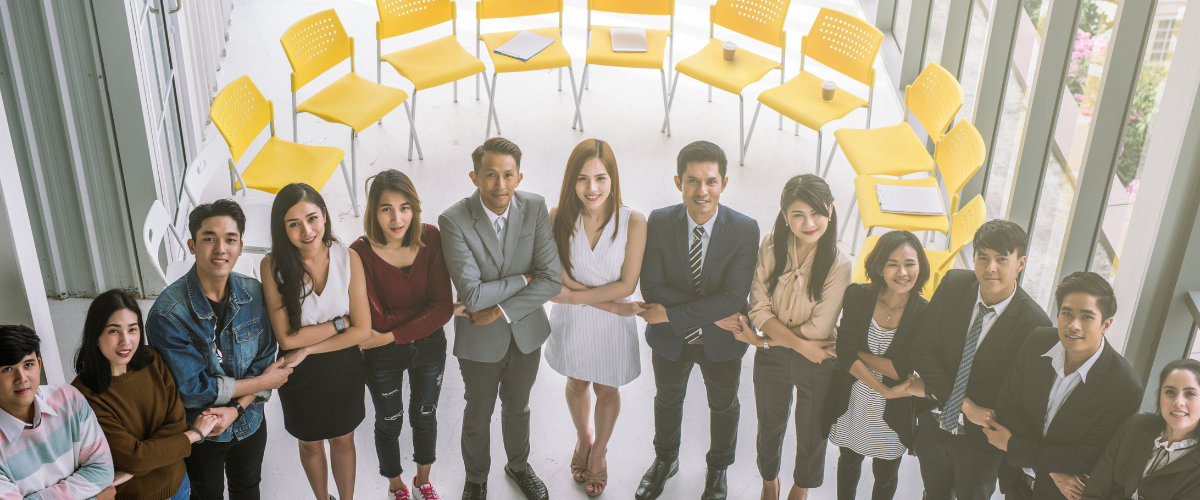
Three lessons that can help trainers understand the risks of directly replicating the same unconscious bias training program across cultural boundaries.
How does an organisation that is committed to providing unconscious bias training to its managers and executives on a global basis overcome the serious cultural and societal differences in the dimensions and meaning of diversity found around the globe?
This was the issue facing a large manufacturer of USB memory devices that wanted to provide unconscious bias training to its leaders and managers across Asia. In an earlier article, we covered the best practices in unconscious bias training in the U.S.
Now let’s examine the challenges of delivering a program with a similar message but different applications and adjustments to be successful in both the U.S. and Asia. Here are three lessons that can help:
Lesson 1
Don’t expect political correctness. You can expect and prepare for statements such as this one from a manager in China: “There are too many women engineers on my team.”
When asked to explain, the manager stated that women would be spending too much time being emotional and consoling each other. They also would take advantage of extended maternity leave and take a full year away from work, he said.
One cultural nuance to be considered is that the term, ‘too many’, also can mean ‘a lot’; however, in this case, the implication was clearly that this manager felt his team was at a disadvantage by having too many women. Such comments need to be addressed directly as an example of both expressed and unconscious bias.

When asked if the manager had observed women being too emotional, he said he had not, but he had heard about this from others. When asked what else he had heard, he stated that women are not as intelligent as men. Having heard this comment before, the trainer was prepared to demonstrate the results of IQ tests that show IQ averages for men and women are the same even though the distributions may be slightly different.
Lesson 2
The dimensions of diversity vary by country. In the U.S., issues such as race and veterans status may be relevant issues, while in Asia, age may be an important factor.
In some cases, age is venerated and the older you are, the more respect you get, while in engineering settings, younger employees often view older employees as not being innovative due to their lack of experience in e-commerce.
In countries such as Malaysia, there are significant and sensitive differences between Indians, Chinese, and Malays that are behind many aspects of conscious and unconscious bias.
Gender appears to be the one universal dimension of unconscious bias that all societies are comfortable with discussing, but there will be differences by country. Also, since China and Japan are relatively homogenous cultures, they are not as aware of incongruities around religion.
Read: How To Refresh Your Organisation’s Culture Efforts
When delivering unconscious bias training outside the U.S., there will be more receptivity to analysing and discussing the impact of language fluency, accents, and cultural differences as contributing factors in bias and micro-inequities.
For example, Americans often assume that if a Chinese do not speak up on a conference call it is because they have nothing to contribute and are assumed to be unhelpful to the team.
The Chinese, on the other hand, are being respectful and waiting for their American counterparts to call on them. To the Chinese, the Americans are excluding them from participation.
Lesson 3
Differences in self-disclosure vary by culture. In an unconscious bias training program in the U.S., learners might be asked to participate in self-disclosure activities such as describing a situation where they were subjected to unconscious bias. But the Chinese, for example, have not been raised in a culture where people talk openly about their feelings, so such activities are confusing.
Ultimately, while many organisations may take pride in having one corporate culture with a common set of values such as honouring diversity and inclusion, how that is put into practice will vary significantly from culture to culture.
Read also: True Cultural Diversity in the Workplace
See it on your own numbers.
Start free, import your team, and run a cycle on real hours. Nothing is filed until you approve it.
Sign up for free