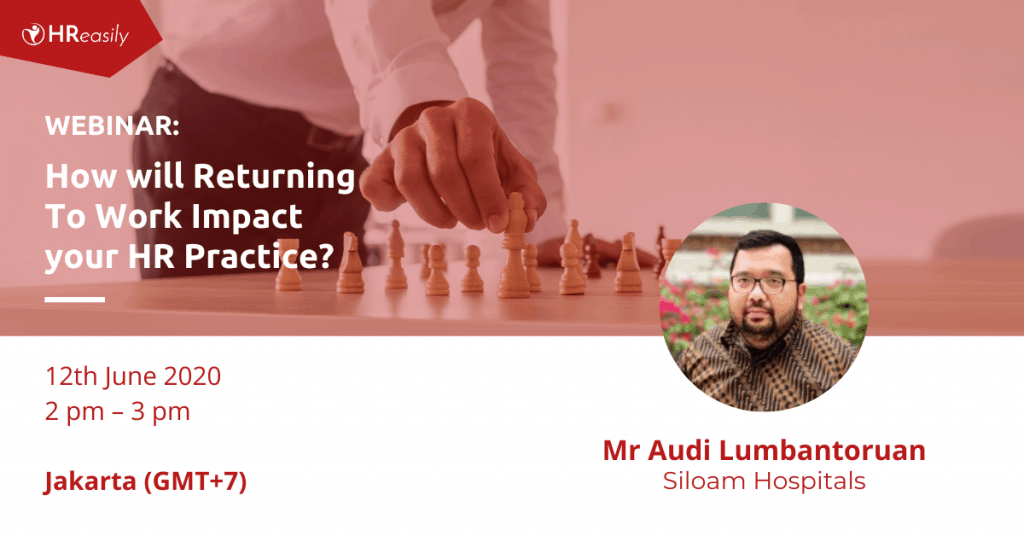
We had the opportunity to sit in an interview session with Mr Audi Lumbantoruan, People and Organization Development Capability Head from Siloam Hospitals in Indonesia. Mr Audi comes with over 10 years’ experience in organizational management, with a specialization in Human Resource Management and working experiences in strategic management and communications. He is an avid speaker, thought leader and passionate about the future of human resource.
Human resource technology has progressed by leaps and bounds, growing to become a US$400 billion industry worldwide. How has the HR landscape in Indonesia shaped these years from when you first started?
Many organizations are still placing Human Resource Management simply as an administration and personnel division/department. Most HR leaders are unfortunately not ready to anticipate future business challenges as I take reference to the survey of “Indonesia HR Outlook 2020-2025, February 2019”. 48% of Chief Human Resource Officers (CHROs) responded that they are Future-Ready. However, their General Managers and/or Department Heads may not necessarily feel the same. They responded only 18% agreeing that they are Future-Ready to accommodate what comes between 2020 – 2025. We need to address the gap, as our HR leaders are thinking that they have the systems and structure in place, but not everyone is expecting the same outcome. When any organisation starts to scale and grow, they need to have the ability to digitally transform the way the work and how they work.
There are increasing demands for business to align profitability alongside sustainability. In the past few years we’ve seen the rise of the freelance “gig” economy, and mobile workforces. With the “Uber”-ization of everything, the ability to always be connected regardless of location, is a great force that COVID has accelerated. What implications does the gig economy have on current HR practices, and what do businesses have to look out for?
For the case of Indonesia, Covid19 pandemic has transformed many organizations to become agile and some of them, unfortunately, must close their business operation and in this case, they must let their employees go. Gig economy will accommodate people with skills and competencies in facing the challenging time in Indonesia. It’s not going to be fast and easy, but slowly people will take this opportunity.
Businesses will need to decide how they want to proceed with this change. It all depends on the maturity of the business, its size, business processes and profitability. It is my observation over the past two months while we find our way through the Covid impact, that Asians favours permanent placements as compared to our western counterparts who prefer less structure and more freedom. So, we in Asia need to start changing the way we talk, the way we are at work, and the way we do the job. Not only does this impact individuals. While having conversations with other business professionals, I’ve heard about businesses creatively changing the way they do business – where you pay now for use in the future.
Being one of the speakers in Future HR (FTHR) and being heavily involved in educating CHROs in Indonesia, can you advice what should small startups and business owners consider when deciding to outsource or hire internally for a permanent headcount?
Business should go back to basics and consider what value the business creates and weigh that against profitability. This is always first and foremost and must be considered before deciding to outsource manpower.
Businesses are required to digitally transform and increasingly more are adopting SAAS for HR management. What does this imply for the future of HR Managers and their role in an organisation? New skills and competencies must be mastered by HR Managers in the digital economy ecosystem. The best thing about this is the acceleration of business process through digital intervention. Currently, we are only at the beginnings of digital intervention through methods of online collaboration, webinars, and conference calls. Over the next 3 years, we will see more technologies and thinking around this. HR managers will be challenged to develop their own competencies in the use of technology to accelerate teamwork and foster collaboration.
Finally, we are humbled that you are speaking with us soon during our webinar on 12th June 2020. What can we expect from that presentation?
Well, I would like to share the ideas of Return To Work (RTW) as part of business recovery in post Covid19 pandemic as well as the new agile HR approach in facilitating business profitability for the next 6 to 12 months onward. The need of digital workplace and digital platforms to facilitate more productive business process will definitely be the favourable choice for organization and HR practitioners in anticipating the post Covid19 pandemic.
Come join us for our webinar, 12th June 2020, signup here now.
See it on your own numbers.
Start free, import your team, and run a cycle on real hours. Nothing is filed until you approve it.
Sign up for free